
In celebration of Small Business Month 2026
May is Small Business Month, but for most entrepreneurs, every day in business is an important one! One of the most useful things a small business owner can do this month, almost halfway through 2026, is to sit down with the numbers and think strategically and realistically about where the business is going.
Financial projections are the tool for that, and you don’t need a finance background or expensive software to get started. All you need are accurate records, your business plan, and a willingness to think through the future in concrete terms. Here are a handful of useful tips:
The Three Documents You Need
Financial projections are structured estimates of what the business will earn and spend over a defined future period. They draw on three documents: a sales forecast that estimates future revenue based on historical patterns, an expense forecast that maps fixed and variable costs going forward, and a cash flow projection that tracks when money will actually arrive and leave. For business owners who maintain a dedicated small business checking account with a clean transaction history, building these projections is significantly easier. Your account records are the primary data source, and well-organized finances produce more accurate forecasts.
Building Your Projections From Scratch
Start with what you already know. Pull the last 12 months of revenue data and look for patterns: which months are stronger, which are slower, and what drives the variation. Identify fixed costs: rent, insurance, loan payments, and permanent payroll. Then, layer in variable costs that move with revenue: inventory, contract labor, transaction fees. The gap between projected revenue and total costs, plotted month by month, is your projected cash flow.
The 6-Month View: Operational Clarity
The six-month projection is the window where you have the most reliable data and the most direct control. Use it to anticipate cash flow gaps before they arrive, plan for upcoming expenses, and make staffing or inventory decisions with a clearer picture of what revenue will support. If a slow period typically arrives in months three and four, a six-month projection makes that visible in advance, when there’s still time to build reserves or adjust expenses before the pressure is on.
The 12-Month View: Growth and Financing
A 12-month projection shifts the lens toward growth. At this point, you’re thinking about hiring, equipment investments, and whether the business’s trajectory supports your goals for the year. It’s also the window most relevant to financing — lenders like us, reviewing a small business loan application, want to see that the business has thought carefully about its financial future, not just that it has performed well in the past. A well-constructed 12-month projection, grounded in real historical data, considerably strengthens your application.
The Three-Year View: Direction Over Precision
A three-year projection will likely be less precise, but it’ll give you the direction you need. You’re making assumptions about market growth, demand, pricing, and capital needs that can’t be predicted with total accuracy.
Three-year projections are most useful when considering significant investment decisions, like a new location, a major equipment purchase, or a key hire. You should also account for debt: if the business plans to take on financing in year two, the repayment obligation needs to be reflected in the year-three cash flow picture.

How Your Banking Relationship Fits In
At Spring Bank, our offerings, including our small business checking accounts, are built to support local small business customers at every stage of their financial development, including planning.
For business owners in the Bronx, Brooklyn, and across New York City, having a relationship with a community banker who understands the local market and can connect with your lived experiences goes a long way. Here, you’re more than an account number. We truly value your small business journey and want to see you succeed. This alone sets us apart from traditional banks, which often use automated algorithms in their lending process, rejecting you before you even get a chance to introduce yourself.
Don’t Be Afraid of Being Wrong
A projection that diverges from actual results provides valuable data for the future. When revenue comes in below forecast, the question is why: was the sales assumption off, did timing shift, or did an unexpected cost arise?
Ultimately, tracking differences between projected and actual figures month by month builds a progressively more accurate model of how the business operates. Business owners who regularly revisit their projections also develop a financial intuition that benefits them when making decisions in the long run.
Resources
The SBA’s business planning guide covers the core components of financial forecasting and includes templates for income statements, cash flow statements, and balance sheets. The SBA’s network of Small Business Development Centers and SCORE mentors provides free one-on-one advising, including support with projections, which is particularly useful for business owners building their first serious forecast. NYC Small Business Services (SBS) also offers borough-based advising through its Business Solution Centers.
This Small Business Month, take the next step and connect with us. Whether online or in-person, we’re excited to meet you and learn more about your goals.
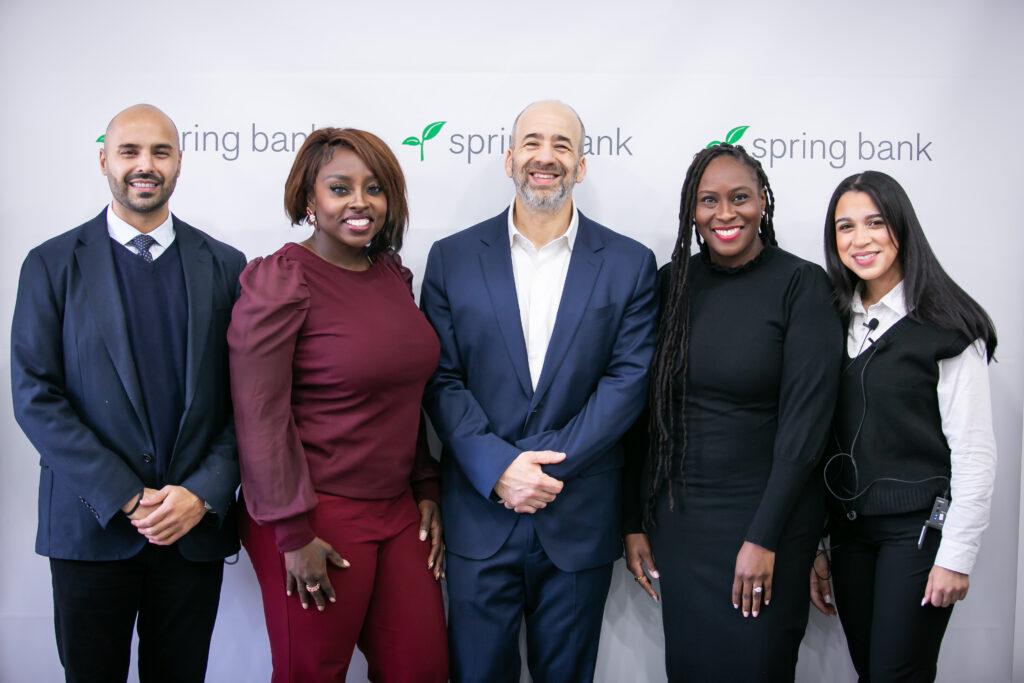
Meet Executives, Changemakers, and Leaders Shaping Culture & Communities Across NYC
May is Small Business Month, and here at Spring Bank, it’s a natural moment to reflect on the entrepreneurs and nonprofit leaders who have built something extraordinary in the neighborhoods we serve. This month and all year long, we’re excited to shine the spotlight on a diverse group of woman-owned businesses and nonprofits who have trusted us as their banking partner.
Whether it’s a small business cooking up nostalgic meals in the Bronx or a nonprofit empowering local youth in Brooklyn, the leaders we’ve had the privilege of working with are running businesses and shaping culture and communities. As a community bank in NYC, supporting women entrepreneurs with the financial tools they need to grow is at the heart of what we do. Read on to learn about and show your support for the amazing leaders behind these organizations:
The Bronx
Small Businesses
Natalia M. Mendez — La Morada | Rooted in the Mott Haven neighborhood in the South Bronx, La Morada is a family-run Oaxacan restaurant preserving Indigenous Mexican cuisine and culture, one mole at a time. Natalia and her family have built not just a critically acclaimed kitchen, but a community institution committed to immigrant rights and local advocacy.
Nneka Bell — Celebrities Quality Painting Inc. | Dr. Nneka Bell is a Navy veteran, construction trailblazer, and advocate for women of color in the trades. After recognizing that her experience as a military aircraft painter made her a natural fit for commercial work, she launched her MWBE-certified firm and hasn’t looked back.
Yenny Castillo — Vineyard Avenue Corp | A Dominican-owned, real estate holding company based in West Nyack, New York, Yenny and her husband opened the business in 2017.
Erica Garcia — Little Exploradores | Little Exploradores is a bilingual, play-based home daycare serving children from infancy through age 12 in the Bronx. Founded by Erica Garcia, the program offers a warm, culturally rich environment where children develop social, emotional, and academic skills through hands-on exploration in both English and Spanish.
Robin Lewis — RL Hair Studio | Robin Lewis has spent over 30 years creating customized wigs for clients nationwide, but her work doesn’t stop at haircare. A licensed cosmetologist, Reiki practitioner, life coach, and podcaster, Robin built RL Hair Studio out of her own experience overcoming depression and self-doubt as a young female entrepreneur. Today, she uses that journey to guide others, offering community coaching sessions alongside her salon services and product line.
Chanel Agyei Oppong — Malina’s Kitchen | Malina’s Kitchen brings authentic West African cuisine to Jerome Avenue in the Bronx, serving traditional dishes like fufu, banku, and groundnut soup seven days a week.
Nonprofits
Isabel Pradas—College Bridge Cafe | Co-founded with the late Kevin Anthony, Isabel Pradas and her team support Bronx residents through career-oriented educational counseling, mentoring, and referral services to access college and other post-secondary education options. Their mission is to motivate and prepare Bronx residents to pursue their dreams and achieve their goals for a better life.
Aisha Norris — DREAM! | Co-founded by South Bronx native Aisha Norris, DREAM! uses restorative justice and arts-based programming to dismantle the school-to-prison pipeline. Aisha and her team knew that corrective discipline was not the answer to student conflicts, so they brought their own solution to NYC schools: restorative justice through the arts.
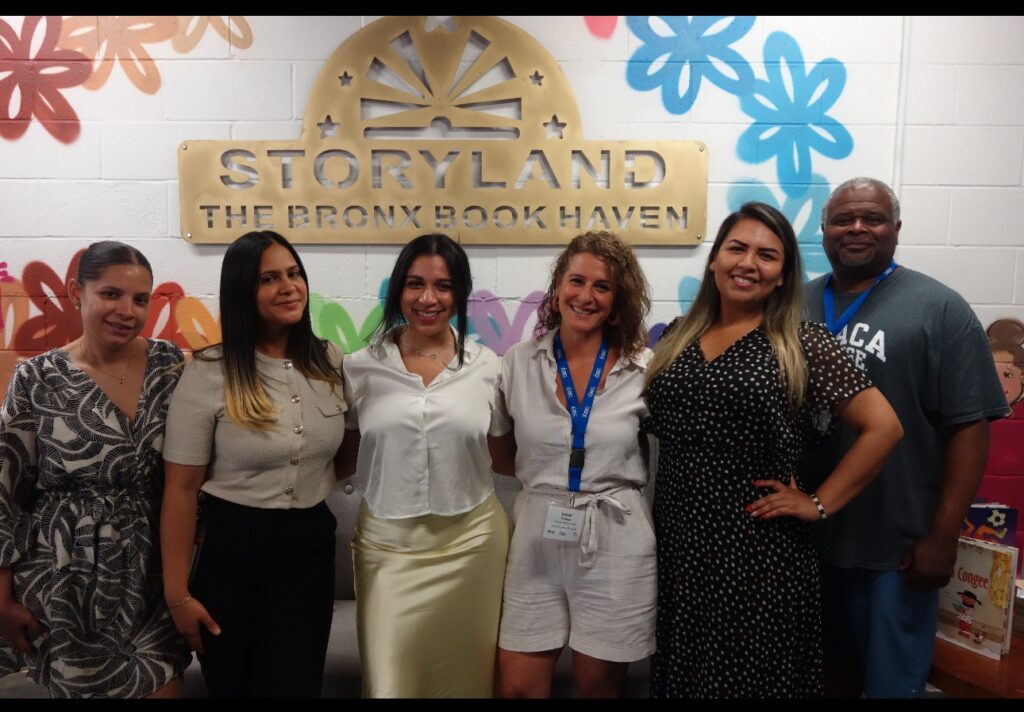
Sulma Arzu Brown — Storyland | Located at the Bronx Terminal Market, Storyland is the borough’s first book lounge designed for children and is a space built to cultivate a lifelong love of reading and learning. Founder Sulma Arzu-Brown has been a champion for literacy and youth development for over 15 years and has been recognized nationally for her work.
Brooklyn
Small Businesses
Sandra Snyder — Lundy’s | Sandra Snyder brought Brooklyn’s iconic Lundy Bros back to life after a 17-year absence, reopening the beloved seafood institution in Red Hook — just blocks from where she and her husband had one of their first dates at the original.
Nonprofits
Carolina Salguero — PortSide New York | PortSide New York advocates for New York City’s working waterfront and connects underserved communities to the harbor’s economic, cultural, and educational resources. Founder Carolina Salguero operates from the historic tanker Mary A. Whalen in Red Hook and was honored by Congress and the White House for her advocacy and Hurricane Sandy relief work.
Tiffiney Davis — Red Hook Art Project | Co-founded in 2009, the Red Hook Art Project provides free visual art, music, and wellness programming to youth ages 8 to 21 in one of Brooklyn’s most resilient neighborhoods. Executive Director Tiffiney Davis, a lifelong Red Hook resident, has secured $1 million in federal funding, expanded programming during the pandemic, and has been recognized with the 2023 Woman of Distinction Award for her work.
Kristina Nagy — Swamp In The City | Founded by Kristina Nagy, Swamp in the City is NYC’s premier Cajun and Creole music festival, bringing the vibrant musical, culinary, and cultural traditions of Southwest Louisiana to the Red Hook waterfront every spring.
Manhattan
Small Businesses

Sarina Prabasi — Buunni Coffee | Sarina Prabasi and her husband Elias Gurmu have built one of northern Manhattan’s most beloved independent coffee companies, with locations in Washington Heights and Inwood. Their ethically sourced Ethiopian beans, micro-roasted weekly, are now also produced out of The Roasting Room, a community co-roasting facility they opened in 2024 in the Bronx’s Hunts Point neighborhood.
Evelyn’s Kitchen—Ayala Donchin | Launched in 2009, Evelyn’s Kitchen started with wholesale baked goods and private chef services. Sixteen years later, EK has grown into a beloved New York City brand, known for its signature Pudgies (delicious, soft, doughy cookies), top-tier catering services, and unwavering commitment to the community.
Jennifer Pawlitschek — Jennifer Pawlitschek Consulting | Jennifer Pawlitschek offers neuroscience-based executive coaching and leadership development for American and global professionals, with a focus on women and diverse populations, helping clients at organizations like Citibank, Bloomberg, and the United Nations move from expertise to impact.
Kelsey Reeder — Kelsey G Reeder LCSW PLLC | Kelsey Reeder is a New York City-based licensed clinical social worker offering psychotherapy, clinical supervision, and specialized support for queer and trans family-building. Her practice is rooted in intersectional, anti-colonialist, and trans-liberatory care.
Rukshinda Rizvi — MaxWell Medical | MaxWell Medical is a state-of-the-art physiotherapy practice founded by the three Rizvi sisters with the vision that Relief is Within Reach. All patients receive specialized care, with services like physical therapy, sports medicine, acupuncture, trigger point therapy, and much more. Rukshinda currently serves as the managing director alongside her sisters.
Nicole A. Mackinlay — Reap What You Sew | Nicole Mackinlay Hahn is a transdisciplinary artist, filmmaker, and advocate whose Reap What You Sew project connects consumers to the human stories behind food, shelter, and clothing, with a particular focus on African artisans and garment workers.
Beyond NYC
Small Businesses
Daysi Briones — IQ Contracting Inc & Associates | Based in Ossining, New York, IQ Contracting is a DBE, WBE, and MWBE-certified general contractor with decades of experience delivering residential, commercial, and public construction projects on time and within budget. Founded by Daysi Briones, the firm handles everything from interior renovations to large-scale exterior restorations.
Nonprofits
Alexandra Barrett — ATB Impact LLC | Based in Brooklyn, ATB Impact LLC provides B2B strategy consulting, supporting leaders with the resources, training, support, and systems that allow them to focus on expanding opportunity for the people they serve. They offer and design leadership development programs, facilitate strategic planning, build operational infrastructure, and create spaces for learning in community.
Janna Marie Hockenjos — Earth Friends Incorporated | Based in New Jersey, Earth Friends is a nonprofit dedicated to early childhood environmental education, offering a nature-based curriculum that teaches young children about ecological relationships, food systems, and their place in the web of life.
Crystal Cron — Presente! Maine | Based in Portland, Maine, Presente! Maine is a grassroots mutual aid organization by and for displaced and dispossessed Afro/Indigenous-Latine immigrants, running survival programs around food sovereignty, community health, and shared leadership.
Bethany Yarrow — The Waterfall Center | Based in the Schoharie Valley of upstate New York, the Waterfall Center for Bioregional Learning is dedicated to land stewardship, Indigenous partnerships, and building community-rooted solutions to the environmental challenges of our time.
Banking Built for What You’re Building
Finding the best small business checking account in New York City means finding a bank that actually understands your community, and that’s exactly what we set out to be. At Spring Bank, our small business checking account options are built for the realities of running a business in this city, alongside small business loans and lines of credit built for businesses at various stages of growth.
We even have tailored solutions for our nonprofit customers, who are often overlooked by traditional banks. As your bank in Bronx, NY, and Red Hook, Brooklyn, we offer personal checking accounts, high-yield savings accounts, and the full range of personal, business, and nonprofit banking solutions to help you and your organization thrive.
If you’re a woman or minority business owner navigating New York’s contracting landscape, a MWBE certification through NYC’s Small Business Services could open meaningful doors, including access to government contracts and resources designed to level the playing field. We’re proud to partner with many of New York City’s certified MWBE businesses, and we’d love to support yours, too.
Learn more about small business banking at Spring Bank.
A Roadmap and Action Plan for Wealth-Building for Every Stage of Life
In Partnership with Nonprofit Partner, GreenPath Financial Wellness

Financial planning isn’t just about budgeting or investing—it’s about navigating real-world conditions that affect earnings, savings, and long-term security. It takes practice to become thoughtful financial decision-makers. The key is designing a plan that accounts for income variability, longevity, and shifting life priorities. The strategies below walk through smart money moves from teens to retirement, while recognizing that everyone’s timeline is unique.
Teens & Early Adulthood: Building the Foundation
This stage is about confidence and habits, not perfection. Learning early how money flows—income, expenses, savings, and credit—gives you decision-making power throughout your life. Many people who succeed financially describe beginning with small wins like tracking spending, setting savings goals, and practicing intentional money behavior before they had big amounts to invest.
Start with clear, realistic goals: open your first personal checking account and personal savings account so you can see how money comes and goes. Learn a simple budget structure like 50% needs / 30% wants / 20% savings or debt reduction, and understand your credit (how it’s built and why it matters for loans, renting, and insurance). Paying attention now saves stress and interest payments later.
Actions:
- Treat saving like a bill. Set up a small automatic transfer into your personal savings account right after payday. This “pay yourself first” habit helps habits stick and builds financial muscle.
- Save 5–10% of part-time income or allowances; this builds both cushion and discipline.
- Keep credit card balances low and pay on time to establish a strong credit history that can reduce borrowing costs later.
These steps help your money choices become intentional rather than impulsive, laying the foundation for healthier financial decisions in the future.
Early Career & Financial Independence: Laying the Groundwork

Once you start earning regularly, whether that’s in your early 20s or later, financial planning becomes about systemizing your money and protecting yourself from setbacks. At this stage, building a safety net and beginning to save for long-term goals are priorities.
Financial experts recommend an emergency fund of three to six months of essential living expenses, held in an accessible personal savings account. This reserve provides security and prevents a turn to high-interest credit when unexpected expenses arise.
Craft a budget that reflects your lifestyle while prioritizing savings and debt reduction. Automating transfers to your personal savings account and retirement accounts makes progress consistent, even when life gets busy. Strengthening credit continues to pay off—good credit scores can reduce interest rates on loans and improve access to housing or financing.
Actions:
- Contribute at least enough to your employer’s retirement plan to capture any match; it’s a guaranteed return on your money.
- Automate savings so you “pay yourself first” before discretionary spending.
- Track your bills and payments so that you never miss a due date. Timely payments are the largest factor in your credit score.
At this stage, the goal isn’t perfect saving; it’s building momentum and resilience. You don’t have to navigate your financial journey alone. GreenPath Financial Wellness can help build a roadmap to long-term security—at every stage. Get in touch with them here. Learn more about our personal savings account and personal checking account options. And, stay tuned for part 2 of ‘Why Financial Planning Matters’ in May!
A Spring Bank Small Business Story

Founded by Mark Snyder, The Red Hook Winery opened its doors in 2008, at a time when starting a new venture came with plenty of risks. The economy was shaky, Brooklyn’s waterfront was still finding its footing, and Red Hook remained largely overlooked. For Mark, that uncertainty wasn’t a deterrent, but rather an invitation to build the 10,000 square foot waterfront winery overlooking New York Harbor that we’re familiar with today.
“I’ve always believed that challenging times are the best times to go all in,” Mark tells us. “It shows your commitment to the people and the place. If you can survive the hard moments, the good ones take care of themselves.”
The Red Hook Winery stands out as an urban winery – the first of its kind in Brooklyn, built on the idea that New York wine didn’t need to be exclusively from upstate to be authentic. Grapes could be grown across the state, brought to the city, and transformed into something meaningful right at the edge of the harbor.
The winery eventually moved to its current home on Pier 41, completing construction just days before Hurricane Sandy made landfall in October 2012. Two days later, the space was underwater, leaving Mark with a difficult choice: rebuild or walk away. Not only did he choose to stay, but he also became a vocal advocate for recovery, helping draw attention, resources, and support to a neighborhood that needed all three.
Mark’s commitment to revitalizing the winery paid off, with The Red Hook Winery coming back stronger, more resilient, and more intentional about its role in the community. The challenges didn’t stop with Hurricane Sandy, though.
While working with the state on waste-management solutions for the winery, Mark and his colleague, Colin Lus, realized that making grappa (a spirit distilled from grape pomace) could reduce their organic waste by 80 percent. What seemed like an innovative solution turned into a legal battle when federal regulators questioned their licensing in 2016.
No longer constrained by legal issues, Mark took the opportunity to launch a cidery in 2020, during the pandemic. Today, the cidery continues to grow, and Mark remains committed to uplifting the small business community in Red Hook. Both The Red Hook Winery and the cidery serve as homes for New York agriculture and viticulture, supporting and promoting other local producers.
“Our model has always been that all ships rise with the tide,” says Mark. “If we support other New York producers, the whole region gets stronger. Our competition isn’t each other—it’s overseas.”

As a community bank in New York with a branch in Red Hook, that’s a philosophy that speaks to us. Since joining the Red Hook community in late 2024, our focus has been on uplifting local small businesses and supporting them with affordable banking solutions. Having worked with his wife, Sandra, the owner of Lundy Bros, we were so excited to also welcome Mark as a small business checking account customer.
“Spring Bank’s arrival in Red Hook is so crucial for people who can’t travel, to just have access to local banking,” Mark emphasizes. “It has been fantastic for me because, first of all, they’re lovely people. They’re very easy to do business with. They’re very accommodating, very professional yet casual, and they know who I am.”
It’s been a pleasure working with Mark as we’ve continued to deepen our roots in the Red Hook community. Through our partnership, we’ve not only learned about his journey with The Red Hook Winery and cidery, but also about the evolution of Red Hook itself over the past decade.
Mark is also a founder and board member of the Red Hook Business Alliance, which is committed to the economic vitality of the Red Hook community and the preservation of one of NYC’s most dynamic and unique waterfront neighborhoods.
“If the neighborhood succeeds, we all succeed,” says Mark.
We look forward to watching The Red Hook Winery continue to grow and adapt within an ever-changing landscape. While Red Hook is constantly evolving and challenges are inevitable, they’ve never slowed Mark’s stride – a quality shared by so many of the neighborhood’s small business owners. Looking ahead, Mark is focused on organic growth, strengthening relationships, and empowering the Red Hook community.
Visit The Red Hook Winery and the cidery at Pier 41 to get a taste of Brooklyn-made wine on the waterfront. If you’re a Red Hook business owner looking for affordable banking solutions, including small business checking accounts and nonprofit checking accounts, visit us at 356 Van Brunt St., Brooklyn, NY 11231.
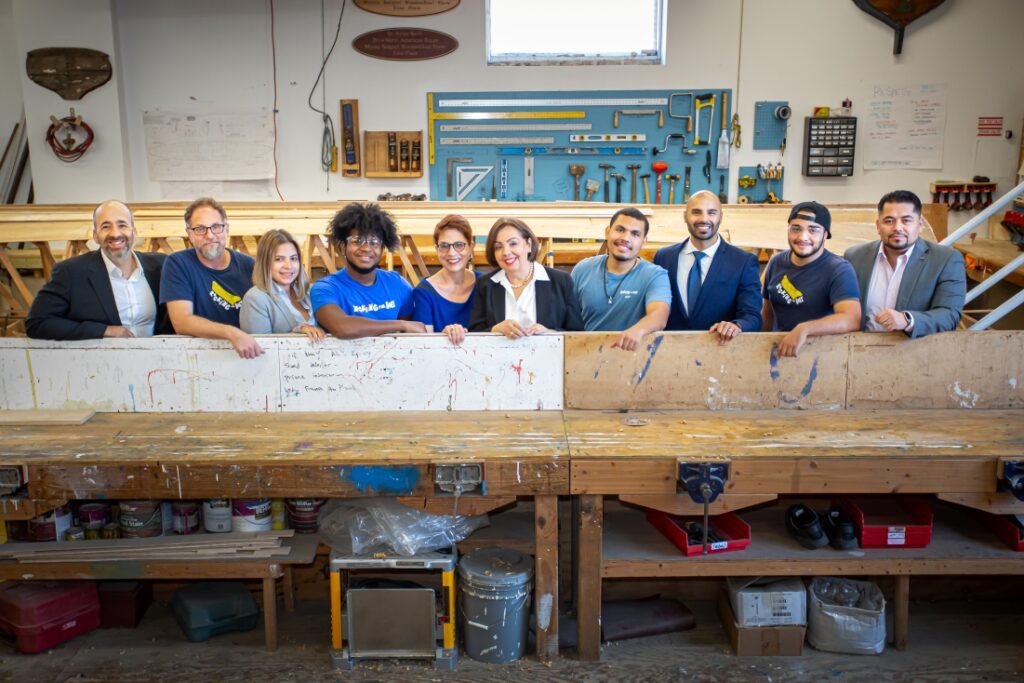
Running a successful nonprofit in New York is no small accomplishment – between navigating grant reimbursement delays, managing unpredictable cash flow, and keeping programs running while waiting on contract payments, the financial pressure never really lets up. Most traditional banks don’t take the time to understand these unique financial predicaments, but we do.
As New York’s first certified B Corp bank and a Community Development Financial Institution (CDFI), we’ve built a nonprofit banking program tailored to how nonprofits actually operate. By supporting nonprofits, we’re ensuring that our communities can continue to access life-changing services from these mission-driven organizations.
Nonprofit Lending: Flexible Financing That Moves With Your Mission
One of the major challenges that nonprofits face is working capital, which is why we offer flexible financing options to support your nonprofit’s mission and make an impact. These funds can be used for working capital, debt refinancing, leasehold improvement, expansion, and more.
Nonprofits that bank with us can choose from a variety of Commercial Lending options, including our Working Capital Line of Credit, a flexible lending product designed specifically around the financial rhythms of nonprofit organizations.
As a community bank in New York, we understand that nonprofits face a unique challenge most lenders don’t:, money owed and receivables take time to arrive. Government contracts reimburse after the fact. Grants have disbursement timelines. Programs have to keep running while you wait for revenues to clear. A working capital line of credit bridges that gap, allowing organizations to cover payroll and staffing, vendor and operating expenses, and program delivery costs without interrupting services.
What makes our nonprofit line of credit different from other banking products?
- Competitive, transparent pricing with no hidden fees
- Flexible terms aligned with grant and contract timing, so repayment actually fits your funding cycle
- No mandatory annual “clean-up” period that forces organizations to pay down the balance and disrupt ongoing operations
- Dedicated relationship support from bankers who understand the nonprofit lending landscape
This is the kind of financing that nonprofits need, and we’re proud to be their trusted banking partner.
Fee-Free Nonprofit Deposit Accounts and Cash Management Tools
Beyond flexible lending, we offer a full suite of nonprofit deposit accounts and money management tools built to make day-to-day operations easier:
- No monthly fees for nonprofit deposit accounts
- Competitive rates on savings, money market accounts, and CDs
- Mobile deposits and 24/7 online and telephone banking
- Remote Deposit Capture (RDC) for organizations processing bulk check donations
- Cash management and controls, including Positive Pay, ACH/e-wire transfers, and account alerts
- Seamless integration with Quicken®, QuickBooks®, and Autobooks®
- Zelle® for Business for fast payments and collections
- Full FDIC coverage through CDARS and ICS for organizations with larger deposit balances
For a busy nonprofit team managing donor contributions, contract payments, and vendor invoices simultaneously, having these tools in one place is an operational advantage.

Relationship-Based Banking That Understands Nonprofit Realities
What sets us apart isn’t just a list of products and features, but the philosophy behind them. We offer relationship-based banking for nonprofits, which means every nonprofit gets direct access to our Business Commercial Lending team. That level of personal service especially matters when you’re trying to bridge a funding gap or move quickly on payroll. As one of our nonprofit partners, Robert Cordero, Executive Director of Grand Street Settlement, put it:
“I think it was the first time a CEO of a bank texted me directly to tell me we were approved for a loan. It was faster, more efficient — and because Spring Bank has experience in nonprofit lending, they knew exactly what we needed to meet the lending requirements.”
Deeply Rooted in the Neighborhoods We Serve
Our commitment to nonprofits is at the heart of our mission. As a CDFI, we’re dedicated to serving underserved communities and supporting economic development where it’s needed most. As New York’s first B Corp bank, we’re certified to the highest standards of social and environmental performance, accountability, and transparency.
That community focus is especially reflected in our nonprofit partnerships. We serve nonprofits across the Bronx and Brooklyn, including organizations like the Red Hook Art Project, a Brooklyn-based nonprofit that has been providing free visual arts, music, and academic instruction to youth in Red Hook since 2009. The Red Hook Art Project is exactly the kind of community-focused organization we were built to support, and since we opened our Red Hook branch, they’ve made it so easy for us to stay active in the community and support impactful programs.
“Being able to partner with a bank that understands the community, the culture that’s here, and the people that are here, while also wanting to serve them is very powerful. I’m in awe to be in partnership with Spring Bank and have moved my bank from Chase to them. I think that they’ll do a lot of important work here in Red Hook.” – Tiffiney Davis, Executive Director of the Red Hook Art Project.
Why Nonprofits Choose Us for Their Banking Needs
For nonprofit executive directors and CFOs searching for a community bank for nonprofits in New York, the decision often comes down to trust, flexibility, and understanding. We offer all three.
Our nonprofit banking program is built on the idea that organizations doing important community work deserve a financial partner that understands their mission. Whether you’re a small arts organization in Brooklyn or a financial capabilities provider in the Bronx, we bring the same level of dedicated, relationship-driven service to every partnership and banking decision.
If you’re looking for nonprofit banking in New York, a working capital loan for nonprofits, or simply a fee-free nonprofit checking account backed by a banker who knows your name, we’re ready to be your trusted banking partner.
Ready to grow your impact together?
Connect with a Spring Bank nonprofit banking specialist today.
Spring Bank is a Member FDIC, Equal Housing Lender, Certified CDFI, and New York’s first B Corp bank.
In Partnership with Our Nonprofit Partner GreenPath Financial Wellness

It often starts with a moment of panic: a bill you didn’t plan for and not enough money to cover it before payday. In that stress, you may think you need to get a personal loan. Payday loans can feel like a lifeline—fast, simple, and there when you need it. But payday loans are not like other personal loans. Before you move forward, it helps to understand how payday loans typically work for many borrowers.
What Payday Loans Are (and Why They’re Risky)
A payday loan is a small, short-term loan (often a few hundred dollars) that is supposed to be repaid by your next payday. On the surface it looks like an easy way to cover a gap in your cash flows. However, the costs can be eye-popping!!
- Most payday loans carry extremely high interest rates—often as high as 391% APR—alarmingly higher than other kinds of credit.
- Because the repayment period is so short (usually about two weeks), and the loan is probably larger than your bi-weekly paycheck, many borrowers struggle to pay back the loan when it comes due. And here comes another application fee.
- Many customers end up repeatedly borrowing: A 2024 report from the California Department of Financial Protection and Innovation found that about 27% of payday borrowers took out 10 or more payday loans in a year, and more than 75% of the total fees charged in the state came from people with seven or more transactions.
You are forced to keep “re-applying” and paying the fees for the same loan. When you add all that up, payday loans can do more harm than good—especially if you’re already living paycheck-to-paycheck or managing other financial obligations.
How Payday Loans Can Impact Your Financial Health
Payday loans are designed for speed, and that can come with trade-offs that aren’t always obvious at first. Before you get a personal loan like a payday loan, remember:
Short repayment windows:
Paying back a loan in just a couple of weeks can be harder than it seems—especially if bills, rent, or food costs are already tight.
Risk of ongoing debt:
Rolling over or taking another payday loan to cover one you can’t repay on time adds up fast. Many borrowers end up paying more in fees than they originally borrowed.
High interest and fees:
Even a modest amount borrowed can end up being expensive when annualized. These aren’t small handling fees—they’re significant costs that can erode your budget.
Alternatives to Consider
Before opting for a payday loan, explore these more sustainable and potentially safer, options:
Short-term small loans from us
Like many other community banks in New York, we offer small dollar loans or “payday alternative loans” with much lower interest rates and better terms than payday lenders. These can be easier to repay, have sensible repayment periods and don’t trap you in cycles of renewing debt. Learn more about our Credit Builder Loan, and how to apply for personal loan with us.
Personal lines of credit or credit builder loans
If you qualify, these products offer credit on better terms and give you time to pay it back without extreme costs.
Talk to a financial counselor
Take advantage of Free financial counseling with our nonprofit partners, Ariva and GreenPath Financial Wellness. They can help you map out a budget, prioritize expenses, and explore debt repayment options you may not have considered.
No-Shame Support
Financial challenges happen to everyone. The key is choosing the path that protects your stability. If you’re considering a payday loan because you’re struggling to make ends meet, pause and consider this: there are resources that can help you find alternatives—and likely at a lower cost.
Get in Touch With Us:
✔ Ask about small-loan products.
✔ Explore budgeting and planning support.
A Spring Bank Customer Feature
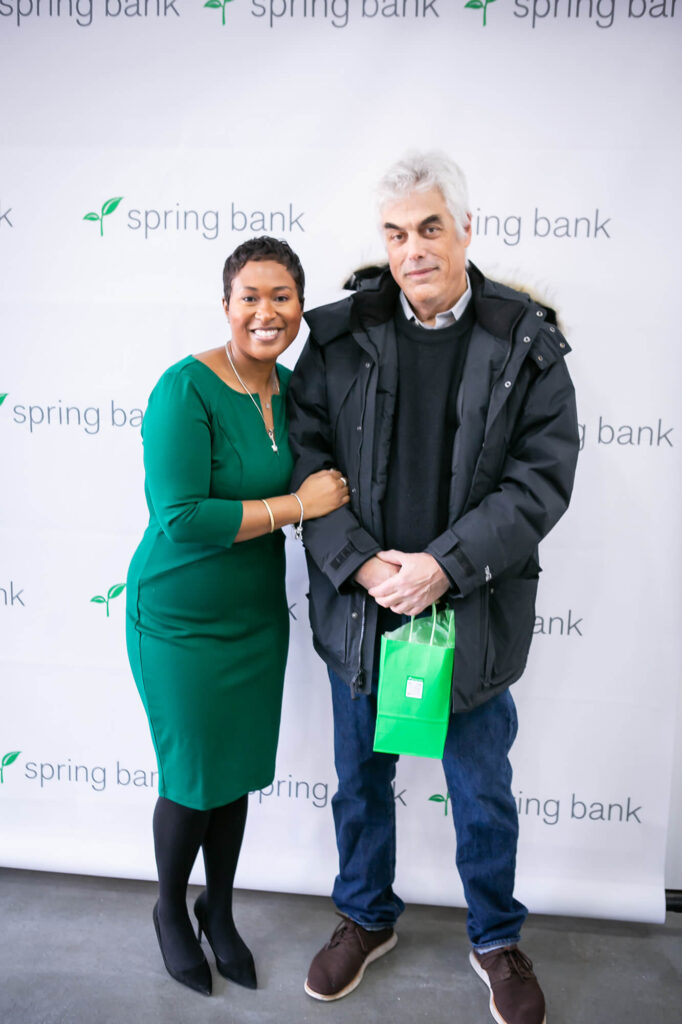
The best part about opening a branch in Red Hook? Getting to know and be in service to Brooklynites—starting with our first customer, Nico.
Five years ago, Nico, a TV and film music writer, moved from Manhattan to live in Red Hook. Not only did he relocate during the chaos of the pandemic, Nico was undergoing a few personal transitions. He knew Red Hook would be a great neighborhood to start his new beginning. The first time Nico visited Red Hook was in the back of a pick up truck in the early 90’s with a writer friend.
“Red Hook was not a place many people visited back then, and there were few small businesses. In fact, Sunny’s, the iconic bar and roots music venue, was only open once or twice a week and with no liquor license. And, it was cash only, at the end of the evening.” explains Nico. “There was a unique neighborhood quality then, that continues.”
As soon as Nico moved to Red Hook, he quickly plugged into the community. From hosting meals, to getting involved in community issues, and joining local boards like the Red Hook Business Alliance, he was eager to give back.
“This community has helped me in so many ways. Red Hook has helped me focus on purpose, within a community. It’s a neighborhood where everyone’s dogs know each other’s names,” Nico muses “We are a very purposeful, organized and tight knit community.”
After Nico’s father passed away, he was left with some capital. His brother guided him to take out a CD (Certificate of Deposit) to accelerate his savings. He knew he was fed up with decades of experiencing the impersonal nature of much larger banks. Just one block from his house, he stopped by our branch, and introduced himself to ReyJane, our Red Hook Branch Manager. He was ready to open a checking account and explore personal savings account options.
“From day one, the team at Spring Bank was so welcoming. I am involved locally in various public service efforts, and the fact that they invest in the local community created a lot of value for me. It’s exactly the way a bank should be run. Right from the beginning, Spring Bank has become an important part of our community,” says Nico.
We are so honored to work with you, Nico, and the entire Red Hook neighborhood. As we celebrate our first Brooklyn anniversary, we hope you’ll get to know more about our everyday, affordable banking products like our personal checking account, and high-interest savings.
Meet Jayson Ambrose: A Spring Bank Staff Feature

What sets us apart from traditional banks? Human connection. Every one of our staff members has a story that motivates them to go above and beyond for our clients as a community bank in New York. This month, we’re excited to spotlight one of our newer staff members, Jayson Ambrose, Spring Bank Accountant, who has contributed his skills and positive outlook to our team and culture since he joined us last March.
Jayson immigrated from the Bahamas to the United States, living first in Tennessee before moving to New York City. As the son of two entrepreneurs, he was exposed early-on to the day-to-day operations of owning, running and growing a small business. Late at night, Jayson would often find his father, an auto-electrician, at the table manually managing his books, and updating his financial ledgers. Eventually, Jayson took a hands-on role with his mother’s business as a teenager, sparking an early interest in accounting.
Jayson shares: “My parents taught me a lot about what it takes to successfully work for yourself which directly impacted my career choices. I wanted to understand how to support small business owners.”
After graduating from Fisk University in Nashville in 2017 with a degree in Business Administration, Jayson worked in finance, while simultaneously launching a life insurance company with his wife. He worked relentlessly to establish himself as a business-minded finance professional with the customers’ needs always top of mind. After he moved to New York City, Jayson’s ultimate goal was to find an accounting role, motivated by his desire to help small businesses manage their finances as he developed his accounting skills. We are so glad that path then led him to us!
As an accountant here at Spring Bank, Jayson manages the administrative tasks of daily banking services, including managing vendor relationships, wire transfers, forecasting budgets and investments. Though he has an extensive background in finance, this is Jayson’s first time focusing only on accounting, so it’s been a wonderful learning opportunity, which he is enthusiastic about.
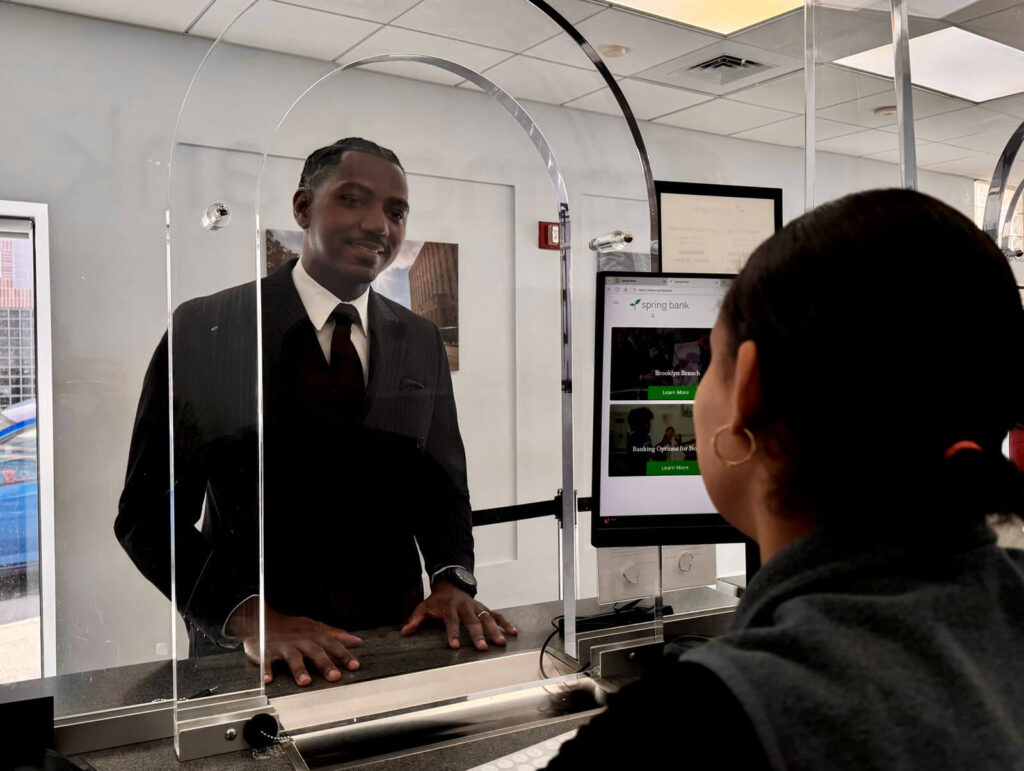
“The biggest thing I’ve learned is about the importance of liquidity, cash flow. It helps me understand why and how businesses fail. It’s essential to have a plan in place to make sure that the doors can stay open and you can recover from any financial setbacks,” Jayson explains. “Business requires a lot of forward planning and projections which I can relate back to my parents who are entrepreneurs.”
Jayson has never worked for a community bank in New York before, but he shares our commitment to small businesses and nonprofit organizations. Working here has given him a new perspective on the New York banking landscape.
“I love it here because Spring Bank is truly here to help the community. I encourage more small businesses to tap into their community bank in New York because I see the value and impact Spring Bank brings to small businesses,” Jayson tells us. “They treat people like people, not a number.”
We were immediately compelled by Jayson’s story because we knew he’d resonate with our mission and understand the work we’re doing to financially empower New Yorkers. Get to know other team members at Spring Bank, like Red Hook Branch Manager, ReyJane, Accountant Binnoy, and Senior Underwriter Germarie. Learn about our small business bank account options, and our mission of financial inclusion for almost 20 years.
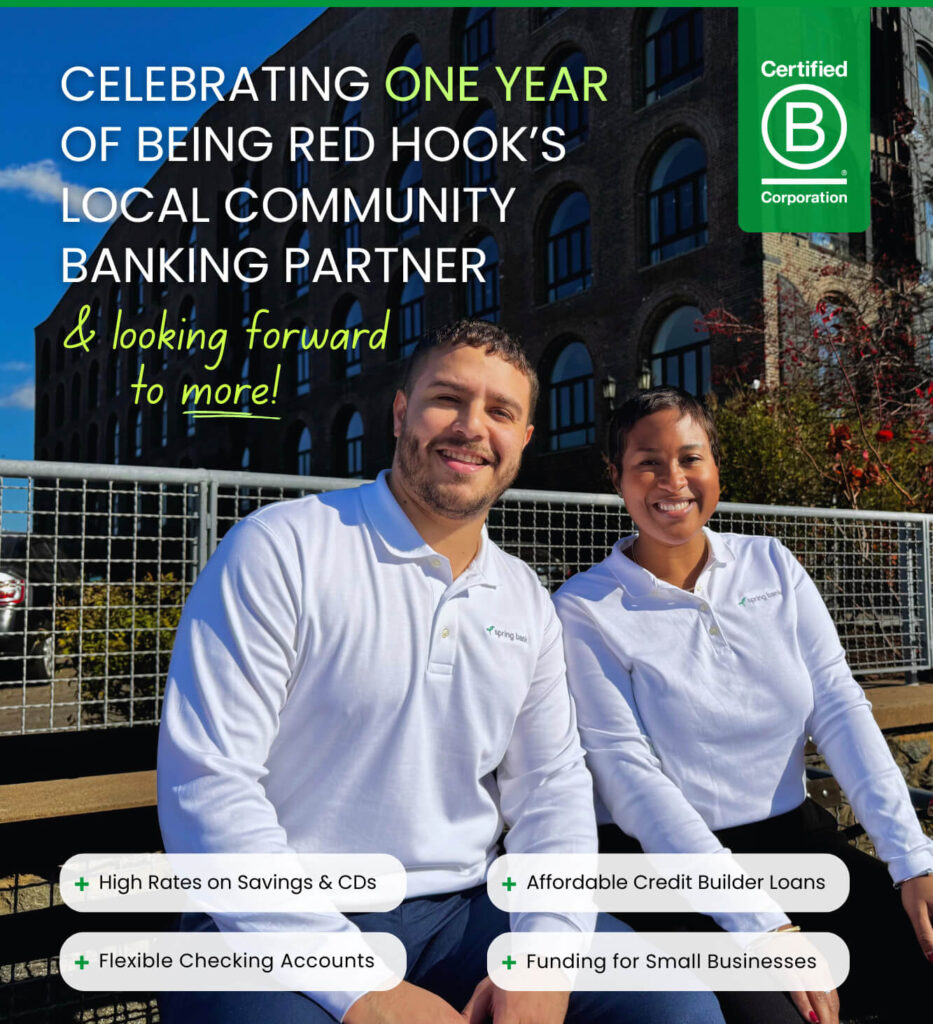
Celebrating our first year in Red Hook, Brooklyn
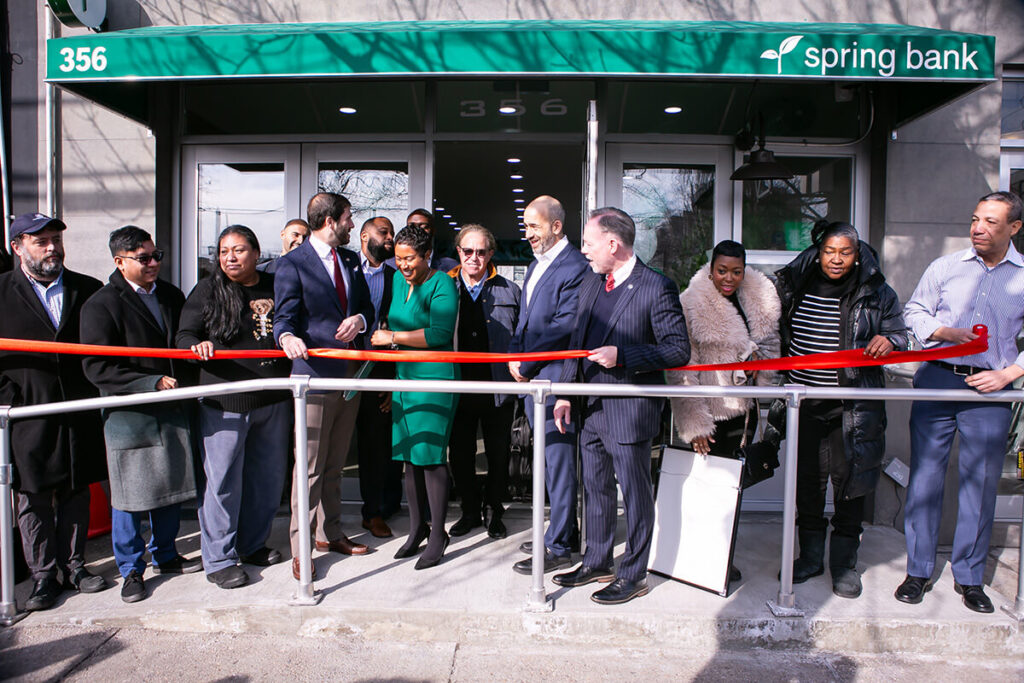
We can hardly believe it’s already been one year since we opened the doors to our first branch in Brooklyn. When local leaders expanded into Red Hook Brooklyn, we saw it as an honor and a great opportunity to be the first bank in Red Hook in over 10 years, and one year in, we have learned a lot. Most importantly, we’ve learned how tight-knit, supportive, and collaborative the community is, and how welcoming they are to newcomers like us. Learn more about our grand opening in Red Hook here.
Here are some of the things we have learned this year:
Stay present. Build trust.
We have loved getting to know the residents, change-makers, and leaders in Red Hook and across the borough. We knew that building trust required us to “show up” and support the work already happening here.
“It was really important in our first year to be present in the local community, to contribute and support as many leaders and initiatives as we can. Earning and building trust takes time, and we look forward to deepening community trust in our second, third and fourth years, too,” says ReyJane Gaudin, Red Hook Branch Manager.
Learn about the incredible work of Red Hook Art Project, Artolution, and Lundy Bros, to name a few of the organizations we love supporting.
All Brooklynites deserve to know their banker.
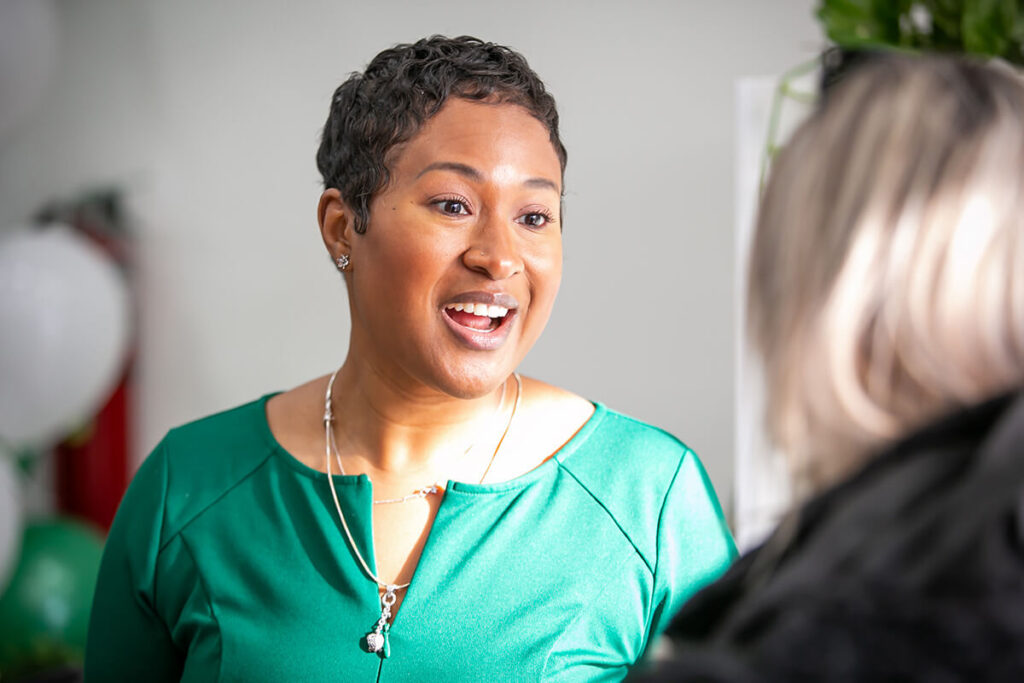
“When’s the last time you heard from your banker? When’s the last time your banker was able to support you, and you actually spoke to them on the phone and not to a bot on a 1-800 line?” asks ReyJane. “When it comes to any challenges you may have, at Spring Bank you always have a banker that you can speak to by name, and you will most likely know them by face as well.”
We value you and your family’s unique story, and we really enjoy getting to know our customers. As ReyJane notes you can reach us when you need to. A real-life, human banker will always be there to take your call or will call you back as soon as they can. We’ve heard that many of our new Brooklyn customers are shifting their relationships from big banks in Brooklyn to us because of our commitment to personalized service. You can count on us to never compromise a human touch for the sake of technological trends.
Transparency and affordability always win.
Speaking of keeping it human, our learning from opening our first branch in the Bronx also rings true in Brooklyn. You will never be surprised by an odd charge or how our products work. And most of our banking products offer fee-free or low-fee options. In addition to serving small businesses and nonprofits in Brooklyn with small business checking accounts and nonprofit accounts, we also exist to support everyday New Yorkers in building financial stability and wealth.
In case you are still wondering what makes us unique among other banks in Brooklyn, check out our transparent and affordable products and services available to all Brooklyn residents:
- Free checking accounts with direct deposit: Our Green Checking Account lets you go paperless and offers zero maintenance fees and no overdraft fees, ever.
- Higher than average interest rates on our high-yield savings accounts.
- Credit-building loan: If your credit is not where you want it to be, this small loan can help you get there and help you build savings, too. Learn more.
- Free financial counseling: Prefer to meet with someone in person? Take advantage of free financial counseling and housing application assistance with our nonprofit partner Ariva at our Red Hook branch for Money Talk Mondays. If you’d rather meet virtually or by phone, all Spring Bank customers also have access to free financial and low-cost debt management counseling with our national nonprofit partner, GreenPath Financial Wellness.
Our Red Hook branch is for all Brooklyn residents. Whether you’re an entrepreneur in need of a small business checking account or are brand-new to banking and eager to open your first high-yield savings account, ReyJane, Israel, and our team are here to help you reach your financial goals. Stop by 356 Van Brunt Street to visit us. We’d love to meet you.

In Partnership with Our Nonprofit Partner, GreenPath Financial Wellness
According to a recent WalletHub survey, nearly 3 in 4 people say their financial situation impacts their mental well-being, and 69% of Americans feel insecure about their finances. It is no wonder so many of us are tired of traditional “new year, new budget” advice. Financial wellness does not have to mean strict spreadsheets. It is about taking small, actionable steps to feel more in control.
Do This: Review your spending patterns
Not That: Start with a strict budget
Take a week to observe how you actually spend. Look at your bank statements and credit card bills to spot patterns. Are subscriptions you no longer use still draining your personal checking accounts? Are grocery runs adding up to more than you realize?
When you understand where your money is really going, you can make small, realistic adjustments – like shopping for generic brands or switching streaming services seasonally. Real progress beats rigid plans every time.
Do This: Automate what you can
Not That: Rely on willpower to save
If you have ever meant to transfer money into a personal savings account but forgot (again), automation can help.Schedule automatic transfers to savings on payday, set up direct deposit to savings, or set up autopay for bills to avoid late fees.
This trick works because it removes temptation and decision fatigue – two major barriers to saving consistently. Even a small automatic transfer adds up over time. Think of it as paying your future self-first.
Do This: Build an emergency cushion
Not That: Wait until you can save “enough”
A full emergency fund (three to six months of expenses) sounds great on paper and can feel impossible when money is tight. Start smaller. Even $20 a week builds momentum. Keep it in an easy-access account, separate from other money, so it does not get mixed with daily spending.
This cushion in your personal savings account helps prepare you for unexpected costs – a car repair, a surprise bill, or even a missed paycheck – and gives you confidence that you can handle what comes your way.
Do This: Plan for joy – not just bills
Not That: Treat fun as “extra” or “unnecessary”
Your budget should not just be about survival. Planning ahead for things that bring you joy, like a family outing, a weekend getaway, or even a nice meal out, keeps your financial plan sustainable. When you budget for joy and happiness, you are less likely to fall into guilt spending or burnout later.
Do This: Check your credit and debt picture
Not That: Avoid it because it feels stressful
It is tempting to look away from debt; however, facing it head-on is the first step to taking control. Pull your free credit report at AnnualCreditReport.com and review all your balances, interest rates, and due dates.
Focus on paying off the smallest balance first (the “snowball” method) to build momentum or tackle the highest-interest debt first (the “avalanche” method) to save money over time.
Do This: Seek trusted support
Not That: Navigate your finances alone
You do not have to have every answer to feel financially confident. Our team here at Spring Bank is ready to help you gain control, build up your personal savings account balances, and if you are dealing with debt, GreenPath offers free financial counseling, and they can provide guidance to lower interest rates, reduce payments, and reduce your stress in the coming year. Contact them here.