
A Roadmap and Action Plan for Wealth-Building for Every Stage of Life
In Partnership with Nonprofit Partner, GreenPath Financial Wellness

Financial planning isn’t just about budgeting or investing—it’s about navigating real-world conditions that affect earnings, savings, and long-term security. It takes practice to become thoughtful financial decision-makers. The key is designing a plan that accounts for income variability, longevity, and shifting life priorities. The strategies below walk through smart money moves from teens to retirement, while recognizing that everyone’s timeline is unique.
Teens & Early Adulthood: Building the Foundation
This stage is about confidence and habits, not perfection. Learning early how money flows—income, expenses, savings, and credit—gives you decision-making power throughout your life. Many people who succeed financially describe beginning with small wins like tracking spending, setting savings goals, and practicing intentional money behavior before they had big amounts to invest.
Start with clear, realistic goals: open your first personal checking account and personal savings account so you can see how money comes and goes. Learn a simple budget structure like 50% needs / 30% wants / 20% savings or debt reduction, and understand your credit (how it’s built and why it matters for loans, renting, and insurance). Paying attention now saves stress and interest payments later.
Actions:
- Treat saving like a bill. Set up a small automatic transfer into your personal savings account right after payday. This “pay yourself first” habit helps habits stick and builds financial muscle.
- Save 5–10% of part-time income or allowances; this builds both cushion and discipline.
- Keep credit card balances low and pay on time to establish a strong credit history that can reduce borrowing costs later.
These steps help your money choices become intentional rather than impulsive, laying the foundation for healthier financial decisions in the future.
Early Career & Financial Independence: Laying the Groundwork

Once you start earning regularly, whether that’s in your early 20s or later, financial planning becomes about systemizing your money and protecting yourself from setbacks. At this stage, building a safety net and beginning to save for long-term goals are priorities.
Financial experts recommend an emergency fund of three to six months of essential living expenses, held in an accessible personal savings account. This reserve provides security and prevents a turn to high-interest credit when unexpected expenses arise.
Craft a budget that reflects your lifestyle while prioritizing savings and debt reduction. Automating transfers to your personal savings account and retirement accounts makes progress consistent, even when life gets busy. Strengthening credit continues to pay off—good credit scores can reduce interest rates on loans and improve access to housing or financing.
Actions:
- Contribute at least enough to your employer’s retirement plan to capture any match; it’s a guaranteed return on your money.
- Automate savings so you “pay yourself first” before discretionary spending.
- Track your bills and payments so that you never miss a due date. Timely payments are the largest factor in your credit score.
At this stage, the goal isn’t perfect saving; it’s building momentum and resilience. You don’t have to navigate your financial journey alone. GreenPath Financial Wellness can help build a roadmap to long-term security—at every stage. Get in touch with them here. Learn more about our personal savings account and personal checking account options. And, stay tuned for part 2 of ‘Why Financial Planning Matters’ in May!
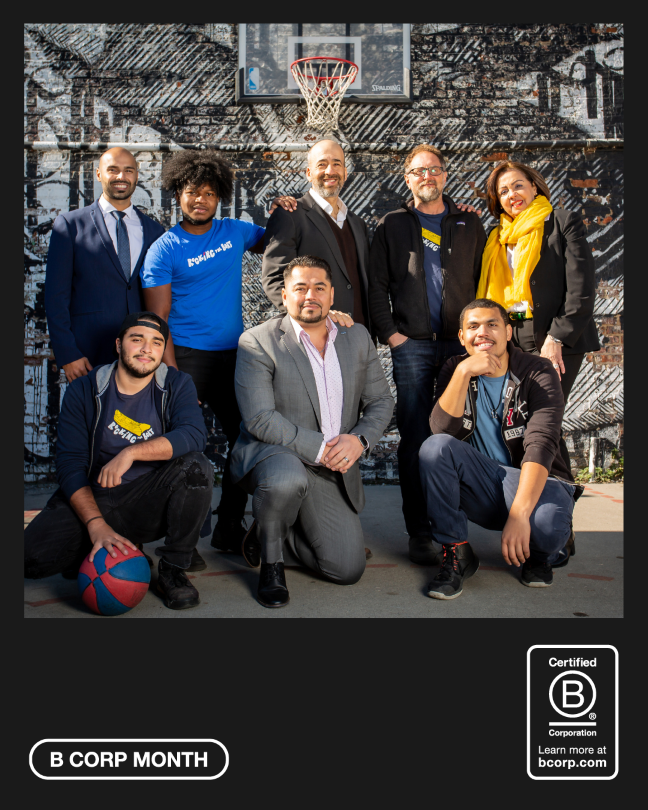
This March, we celebrate one of our proudest accomplishments: joining the B Corp movement. In 2016, we became the first B Corp-certified bank in New York State, and today, we remain among the highest-rated B Corp banks in the country.
The B Corp movement is built on the idea that business can be a force for good, meeting the needs of customers and communities while also achieving business goals. We’ve learned that real progress requires partnerships. For us, that has always meant showing up alongside the nonprofits, community organizations, and underserved communities that traditional banks have historically left behind.
Banking Where It’s Needed Most
Founded in 2007 in the South Bronx as the only bank to establish its base in the borough in over a quarter century, we set out to work in neighborhoods where high-cost check cashing and predatory lending were unfortunately the norm. 19 years later, our mission hasn’t changed. We continue to lead on our promise of community-first banking and are especially driven by our B Corp values.
Most recently, we opened a new branch in Red Hook, Brooklyn, a neighborhood that had long been underserved by traditional financial institutions. Without a local bank for over a decade, residents and small businesses were forced to travel outside the neighborhood for every transaction or spend money on high-cost alternative financial services. Since opening the branch over a year ago, we’ve established partnerships with local organizations, including the Red Hook Initiative and Red Hook Art Project, and are working to build relations with the Red Hook community.
Products and Partnerships That Move Our Communities Forward
Another way we put our B Corp values into action is by creating community-inspired products, like our Credit Builder Loan and Nonprofit Banking Program, that support the day-to-day financial health of all New Yorkers.
From fee-free nonprofit checking accounts and flexible working capital lines of credit to small business loans built for borrowers traditional banks turn away, every product we offer is intentionally designed. We know that a nonprofit waiting on a government contract reimbursement can’t afford to wait on their bank, too. We know that a delivery worker without a credit history still deserves access to a safe, reliable bike. So, we build our products accordingly.
Our GoGreen Cycle Loan especially embodies what it means to be a B Corp. Offered in partnership with local bike shops across the city, it provides affordable e-bike financing with no credit score requirement, making sustainable transportation accessible to the workers who need it most. How’d we get it done? Once again, thanks to our local nonprofit partnerships. As a founding member and board member of The E-Mobility Project (TEMP), a nonprofit working to advance mobility options and sustainability in New York City, we worked together to design and launch the GoGreen Cycle Loan, which was the first of its kind!
The B Corp movement asks businesses to consider their impact on every stakeholder, including workers, communities, and the environment, and our work is a direct expression of that. We’ve spent nearly 20 years building relationships with mission-driven organizations across New York City that are doing the hard, essential work of keeping communities afloat. We’ve also supported – and continue to support – nonprofits, small businesses, and everyday New Yorkers with the financial tools they need to carry out essential daily tasks.
So, whether you need a small business checking account, a personal checking account, or personal or business financing, we’ve got you covered with products that are community-focused and backed by our B Corp values.
The B Is Just the Beginning
We’ve always understood that our B Corp certification isn’t a finish line, but a framework for continuous improvement, and one we hold ourselves to every single day. Here’s to many more years of community-first banking and to everything still ahead! Thank you for being part of our journey.
Ready to bank with a purpose? Explore our personal and business banking options or learn more about our nonprofit banking program. You can also visit our B Corp profile to learn more about what our certification means and the standards we’re committed to upholding.
A Spring Bank Small Business Story

Founded by Mark Snyder, The Red Hook Winery opened its doors in 2008, at a time when starting a new venture came with plenty of risks. The economy was shaky, Brooklyn’s waterfront was still finding its footing, and Red Hook remained largely overlooked. For Mark, that uncertainty wasn’t a deterrent, but rather an invitation to build the 10,000 square foot waterfront winery overlooking New York Harbor that we’re familiar with today.
“I’ve always believed that challenging times are the best times to go all in,” Mark tells us. “It shows your commitment to the people and the place. If you can survive the hard moments, the good ones take care of themselves.”
The Red Hook Winery stands out as an urban winery – the first of its kind in Brooklyn, built on the idea that New York wine didn’t need to be exclusively from upstate to be authentic. Grapes could be grown across the state, brought to the city, and transformed into something meaningful right at the edge of the harbor.
The winery eventually moved to its current home on Pier 41, completing construction just days before Hurricane Sandy made landfall in October 2012. Two days later, the space was underwater, leaving Mark with a difficult choice: rebuild or walk away. Not only did he choose to stay, but he also became a vocal advocate for recovery, helping draw attention, resources, and support to a neighborhood that needed all three.
Mark’s commitment to revitalizing the winery paid off, with The Red Hook Winery coming back stronger, more resilient, and more intentional about its role in the community. The challenges didn’t stop with Hurricane Sandy, though.
While working with the state on waste-management solutions for the winery, Mark and his colleague, Colin Lus, realized that making grappa (a spirit distilled from grape pomace) could reduce their organic waste by 80 percent. What seemed like an innovative solution turned into a legal battle when federal regulators questioned their licensing in 2016.
No longer constrained by legal issues, Mark took the opportunity to launch a cidery in 2020, during the pandemic. Today, the cidery continues to grow, and Mark remains committed to uplifting the small business community in Red Hook. Both The Red Hook Winery and the cidery serve as homes for New York agriculture and viticulture, supporting and promoting other local producers.
“Our model has always been that all ships rise with the tide,” says Mark. “If we support other New York producers, the whole region gets stronger. Our competition isn’t each other—it’s overseas.”

As a community bank in New York with a branch in Red Hook, that’s a philosophy that speaks to us. Since joining the Red Hook community in late 2024, our focus has been on uplifting local small businesses and supporting them with affordable banking solutions. Having worked with his wife, Sandra, the owner of Lundy Bros, we were so excited to also welcome Mark as a small business checking account customer.
“Spring Bank’s arrival in Red Hook is so crucial for people who can’t travel, to just have access to local banking,” Mark emphasizes. “It has been fantastic for me because, first of all, they’re lovely people. They’re very easy to do business with. They’re very accommodating, very professional yet casual, and they know who I am.”
It’s been a pleasure working with Mark as we’ve continued to deepen our roots in the Red Hook community. Through our partnership, we’ve not only learned about his journey with The Red Hook Winery and cidery, but also about the evolution of Red Hook itself over the past decade.
Mark is also a founder and board member of the Red Hook Business Alliance, which is committed to the economic vitality of the Red Hook community and the preservation of one of NYC’s most dynamic and unique waterfront neighborhoods.
“If the neighborhood succeeds, we all succeed,” says Mark.
We look forward to watching The Red Hook Winery continue to grow and adapt within an ever-changing landscape. While Red Hook is constantly evolving and challenges are inevitable, they’ve never slowed Mark’s stride – a quality shared by so many of the neighborhood’s small business owners. Looking ahead, Mark is focused on organic growth, strengthening relationships, and empowering the Red Hook community.
Visit The Red Hook Winery and the cidery at Pier 41 to get a taste of Brooklyn-made wine on the waterfront. If you’re a Red Hook business owner looking for affordable banking solutions, including small business checking accounts and nonprofit checking accounts, visit us at 356 Van Brunt St., Brooklyn, NY 11231.
In Partnership with Our Nonprofit Partner GreenPath Financial Wellness

It often starts with a moment of panic: a bill you didn’t plan for and not enough money to cover it before payday. In that stress, you may think you need to get a personal loan. Payday loans can feel like a lifeline—fast, simple, and there when you need it. But payday loans are not like other personal loans. Before you move forward, it helps to understand how payday loans typically work for many borrowers.
What Payday Loans Are (and Why They’re Risky)
A payday loan is a small, short-term loan (often a few hundred dollars) that is supposed to be repaid by your next payday. On the surface it looks like an easy way to cover a gap in your cash flows. However, the costs can be eye-popping!!
- Most payday loans carry extremely high interest rates—often as high as 391% APR—alarmingly higher than other kinds of credit.
- Because the repayment period is so short (usually about two weeks), and the loan is probably larger than your bi-weekly paycheck, many borrowers struggle to pay back the loan when it comes due. And here comes another application fee.
- Many customers end up repeatedly borrowing: A 2024 report from the California Department of Financial Protection and Innovation found that about 27% of payday borrowers took out 10 or more payday loans in a year, and more than 75% of the total fees charged in the state came from people with seven or more transactions.
You are forced to keep “re-applying” and paying the fees for the same loan. When you add all that up, payday loans can do more harm than good—especially if you’re already living paycheck-to-paycheck or managing other financial obligations.
How Payday Loans Can Impact Your Financial Health
Payday loans are designed for speed, and that can come with trade-offs that aren’t always obvious at first. Before you get a personal loan like a payday loan, remember:
Short repayment windows:
Paying back a loan in just a couple of weeks can be harder than it seems—especially if bills, rent, or food costs are already tight.
Risk of ongoing debt:
Rolling over or taking another payday loan to cover one you can’t repay on time adds up fast. Many borrowers end up paying more in fees than they originally borrowed.
High interest and fees:
Even a modest amount borrowed can end up being expensive when annualized. These aren’t small handling fees—they’re significant costs that can erode your budget.
Alternatives to Consider
Before opting for a payday loan, explore these more sustainable and potentially safer, options:
Short-term small loans from us
Like many other community banks in New York, we offer small dollar loans or “payday alternative loans” with much lower interest rates and better terms than payday lenders. These can be easier to repay, have sensible repayment periods and don’t trap you in cycles of renewing debt. Learn more about our Credit Builder Loan, and how to apply for personal loan with us.
Personal lines of credit or credit builder loans
If you qualify, these products offer credit on better terms and give you time to pay it back without extreme costs.
Talk to a financial counselor
Take advantage of Free financial counseling with our nonprofit partners, Ariva and GreenPath Financial Wellness. They can help you map out a budget, prioritize expenses, and explore debt repayment options you may not have considered.
No-Shame Support
Financial challenges happen to everyone. The key is choosing the path that protects your stability. If you’re considering a payday loan because you’re struggling to make ends meet, pause and consider this: there are resources that can help you find alternatives—and likely at a lower cost.
Get in Touch With Us:
✔ Ask about small-loan products.
✔ Explore budgeting and planning support.
A Spring Bank Customer Feature
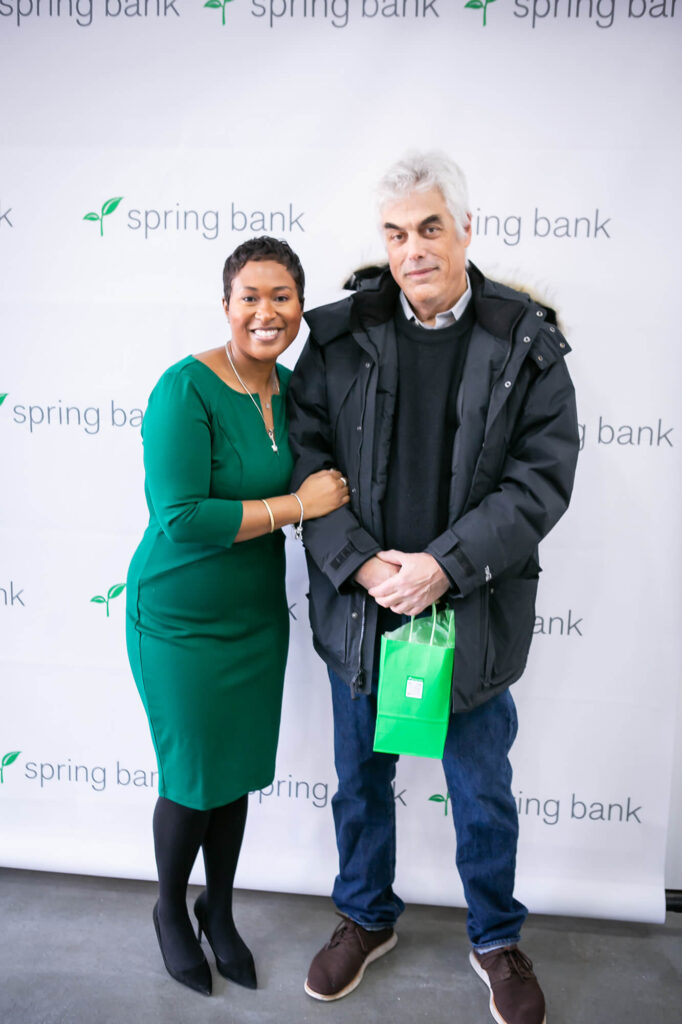
The best part about opening a branch in Red Hook? Getting to know and be in service to Brooklynites—starting with our first customer, Nico.
Five years ago, Nico, a TV and film music writer, moved from Manhattan to live in Red Hook. Not only did he relocate during the chaos of the pandemic, Nico was undergoing a few personal transitions. He knew Red Hook would be a great neighborhood to start his new beginning. The first time Nico visited Red Hook was in the back of a pick up truck in the early 90’s with a writer friend.
“Red Hook was not a place many people visited back then, and there were few small businesses. In fact, Sunny’s, the iconic bar and roots music venue, was only open once or twice a week and with no liquor license. And, it was cash only, at the end of the evening.” explains Nico. “There was a unique neighborhood quality then, that continues.”
As soon as Nico moved to Red Hook, he quickly plugged into the community. From hosting meals, to getting involved in community issues, and joining local boards like the Red Hook Business Alliance, he was eager to give back.
“This community has helped me in so many ways. Red Hook has helped me focus on purpose, within a community. It’s a neighborhood where everyone’s dogs know each other’s names,” Nico muses “We are a very purposeful, organized and tight knit community.”
After Nico’s father passed away, he was left with some capital. His brother guided him to take out a CD (Certificate of Deposit) to accelerate his savings. He knew he was fed up with decades of experiencing the impersonal nature of much larger banks. Just one block from his house, he stopped by our branch, and introduced himself to ReyJane, our Red Hook Branch Manager. He was ready to open a checking account and explore personal savings account options.
“From day one, the team at Spring Bank was so welcoming. I am involved locally in various public service efforts, and the fact that they invest in the local community created a lot of value for me. It’s exactly the way a bank should be run. Right from the beginning, Spring Bank has become an important part of our community,” says Nico.
We are so honored to work with you, Nico, and the entire Red Hook neighborhood. As we celebrate our first Brooklyn anniversary, we hope you’ll get to know more about our everyday, affordable banking products like our personal checking account, and high-interest savings.
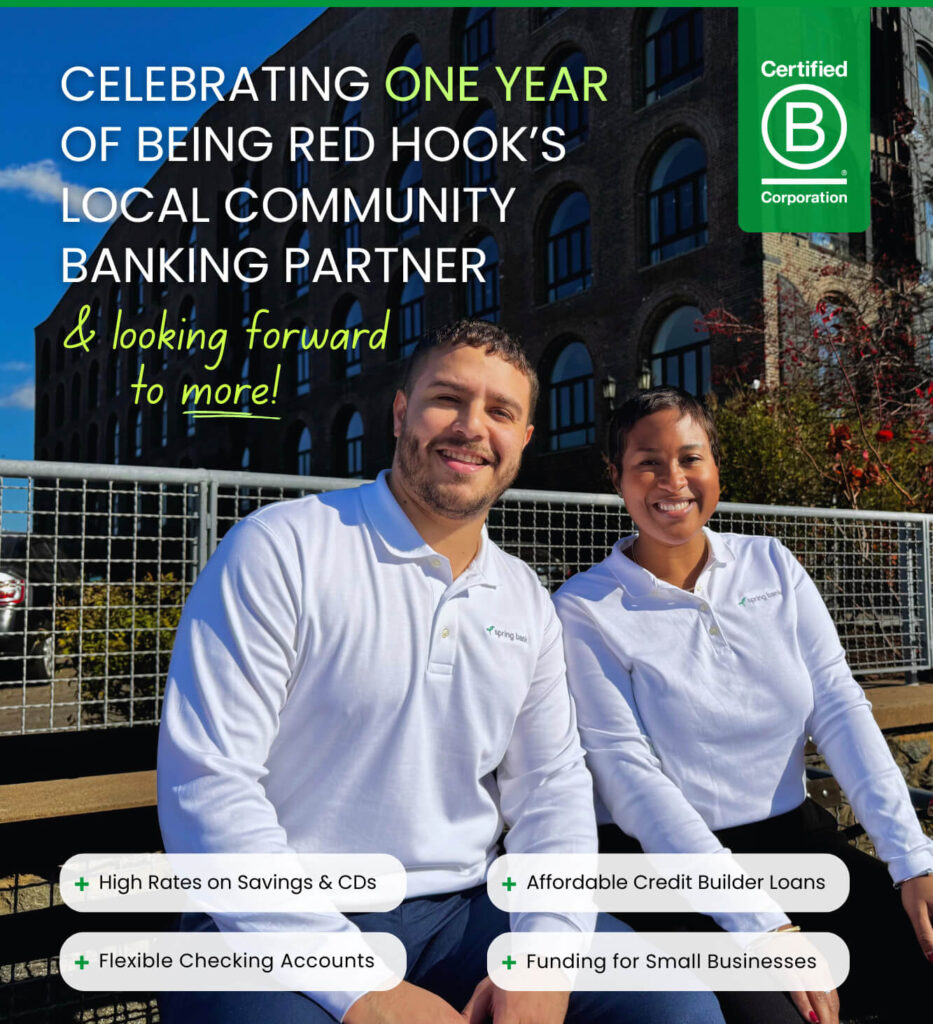
Celebrating our first year in Red Hook, Brooklyn
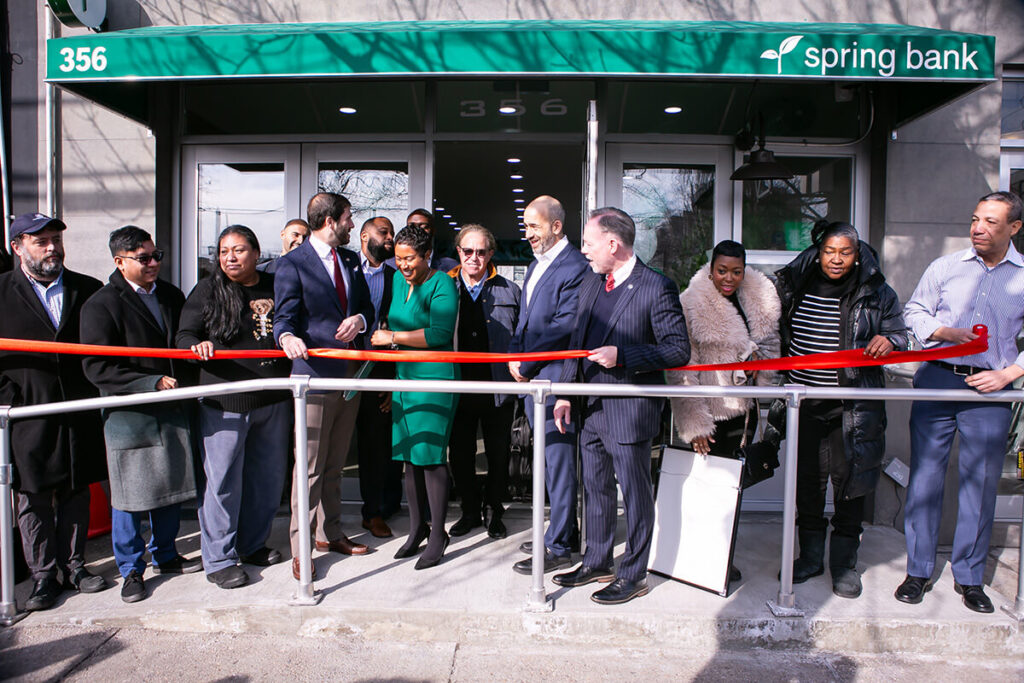
We can hardly believe it’s already been one year since we opened the doors to our first branch in Brooklyn. When local leaders expanded into Red Hook Brooklyn, we saw it as an honor and a great opportunity to be the first bank in Red Hook in over 10 years, and one year in, we have learned a lot. Most importantly, we’ve learned how tight-knit, supportive, and collaborative the community is, and how welcoming they are to newcomers like us. Learn more about our grand opening in Red Hook here.
Here are some of the things we have learned this year:
Stay present. Build trust.
We have loved getting to know the residents, change-makers, and leaders in Red Hook and across the borough. We knew that building trust required us to “show up” and support the work already happening here.
“It was really important in our first year to be present in the local community, to contribute and support as many leaders and initiatives as we can. Earning and building trust takes time, and we look forward to deepening community trust in our second, third and fourth years, too,” says ReyJane Gaudin, Red Hook Branch Manager.
Learn about the incredible work of Red Hook Art Project, Artolution, and Lundy Bros, to name a few of the organizations we love supporting.
All Brooklynites deserve to know their banker.
“When’s the last time you heard from your banker? When’s the last time your banker was able to support you, and you actually spoke to them on the phone and not to a bot on a 1-800 line?” asks ReyJane. “When it comes to any challenges you may have, at Spring Bank you always have a banker that you can speak to by name, and you will most likely know them by face as well.”
We value you and your family’s unique story, and we really enjoy getting to know our customers. As ReyJane notes you can reach us when you need to. A real-life, human banker will always be there to take your call or will call you back as soon as they can. We’ve heard that many of our new Brooklyn customers are shifting their relationships from big banks in Brooklyn to us because of our commitment to personalized service. You can count on us to never compromise a human touch for the sake of technological trends.
Transparency and affordability always win.
Speaking of keeping it human, our learning from opening our first branch in the Bronx also rings true in Brooklyn. You will never be surprised by an odd charge or how our products work. And most of our banking products offer fee-free or low-fee options. In addition to serving small businesses and nonprofits in Brooklyn with small business checking accounts and nonprofit accounts, we also exist to support everyday New Yorkers in building financial stability and wealth.
In case you are still wondering what makes us unique among other banks in Brooklyn, check out our transparent and affordable products and services available to all Brooklyn residents:
- Free checking accounts with direct deposit: Our Green Checking Account lets you go paperless and offers zero maintenance fees and no overdraft fees, ever.
- Higher than average interest rates on our high-yield savings accounts.
- Credit-building loan: If your credit is not where you want it to be, this small loan can help you get there and help you build savings, too. Learn more.
- Free financial counseling: Prefer to meet with someone in person? Take advantage of free financial counseling and housing application assistance with our nonprofit partner Ariva at our Red Hook branch for Money Talk Mondays. If you’d rather meet virtually or by phone, all Spring Bank customers also have access to free financial and low-cost debt management counseling with our national nonprofit partner, GreenPath Financial Wellness.
Our Red Hook branch is for all Brooklyn residents. Whether you’re an entrepreneur in need of a small business checking account or are brand-new to banking and eager to open your first high-yield savings account, ReyJane, Israel, and our team are here to help you reach your financial goals. Stop by 356 Van Brunt Street to visit us. We’d love to meet you.

In Partnership with Our Nonprofit Partner, GreenPath Financial Wellness
According to a recent WalletHub survey, nearly 3 in 4 people say their financial situation impacts their mental well-being, and 69% of Americans feel insecure about their finances. It is no wonder so many of us are tired of traditional “new year, new budget” advice. Financial wellness does not have to mean strict spreadsheets. It is about taking small, actionable steps to feel more in control.
Do This: Review your spending patterns
Not That: Start with a strict budget
Take a week to observe how you actually spend. Look at your bank statements and credit card bills to spot patterns. Are subscriptions you no longer use still draining your personal checking accounts? Are grocery runs adding up to more than you realize?
When you understand where your money is really going, you can make small, realistic adjustments – like shopping for generic brands or switching streaming services seasonally. Real progress beats rigid plans every time.
Do This: Automate what you can
Not That: Rely on willpower to save
If you have ever meant to transfer money into a personal savings account but forgot (again), automation can help.Schedule automatic transfers to savings on payday, set up direct deposit to savings, or set up autopay for bills to avoid late fees.
This trick works because it removes temptation and decision fatigue – two major barriers to saving consistently. Even a small automatic transfer adds up over time. Think of it as paying your future self-first.
Do This: Build an emergency cushion
Not That: Wait until you can save “enough”
A full emergency fund (three to six months of expenses) sounds great on paper and can feel impossible when money is tight. Start smaller. Even $20 a week builds momentum. Keep it in an easy-access account, separate from other money, so it does not get mixed with daily spending.
This cushion in your personal savings account helps prepare you for unexpected costs – a car repair, a surprise bill, or even a missed paycheck – and gives you confidence that you can handle what comes your way.
Do This: Plan for joy – not just bills
Not That: Treat fun as “extra” or “unnecessary”
Your budget should not just be about survival. Planning ahead for things that bring you joy, like a family outing, a weekend getaway, or even a nice meal out, keeps your financial plan sustainable. When you budget for joy and happiness, you are less likely to fall into guilt spending or burnout later.
Do This: Check your credit and debt picture
Not That: Avoid it because it feels stressful
It is tempting to look away from debt; however, facing it head-on is the first step to taking control. Pull your free credit report at AnnualCreditReport.com and review all your balances, interest rates, and due dates.
Focus on paying off the smallest balance first (the “snowball” method) to build momentum or tackle the highest-interest debt first (the “avalanche” method) to save money over time.
Do This: Seek trusted support
Not That: Navigate your finances alone
You do not have to have every answer to feel financially confident. Our team here at Spring Bank is ready to help you gain control, build up your personal savings account balances, and if you are dealing with debt, GreenPath offers free financial counseling, and they can provide guidance to lower interest rates, reduce payments, and reduce your stress in the coming year. Contact them here.
In partnership with nonprofit partner, GreenPath Financial Wellness

The holidays should bring joy and not stress. However, the reality is that for most of us, this year—when every trip to the grocery store or gas station feels more expensive than the last—this holiday season can also bring a heavy dose of stress. In 2025, 67% of Americans report living paycheck to paycheck. Even households with steady incomes are struggling to keep up, leaving little room for holiday travel, gifts, or hosting holiday gatherings.
Celebrating does not have to mean draining your personal savings account or racking up credit card debt. With planning and budget-conscious choices, you can still enjoy your holiday traditions that matter.
-
- “Over the River and Through the Woods:” Holiday Travel on a Budget
- Skip peak travel days. If you can, avoid flying or driving on the Wednesday before Thanksgiving or the weekend before Hanukkah or Christmas as those days see the highest ticket prices and traffic.
- Pack smarter. Extra baggage fees add up quickly. Challenge yourself to fit everything into a carry-on (Bonus: no waiting at baggage claim).
- Road trip savings. Carpool with family or friends heading in the same direction. Sharing fuel and toll costs makes a big difference.
- Virtual visits. Can’t afford the trip this year? Plan a video call “holiday dinner” with family. You’ll still connect.
- It Doesn’t Need to Be Feast or Famine: Holiday Dining on a Budget
- Make it a potluck. Hosting does not mean you have to be responsible to buy all the groceries or cook every dish. Ask guests to bring their favorite side or dessert – most people enjoy contributing.
- Set the mood with DIY décor. A string of lights, some greenery, and candles go a long way. Get your kids involved with crafty table decor and teach them how to make the holidays beautiful with just a few dollars.
- Cut back on extras. No one will notice if you skip matching napkins, the most expensive wines or pricey table centerpieces. What they will remember is the feeling of connection.
- Gifts That Don’t Break Your Budget: Holiday Gifting on a Budget
- Secret shopper or gift swaps. Instead of buying for everyone, draw names so each person gives and receives one thoughtful gift.
- Set a spending cap. Agree as a family or friend group to keep gifts under $20 or $30. It keeps things fun and fair, and unlike a quick order online, requires more personalization and thoughtfulness.
- DIY presents. Baked goods, homemade candles, or framed photos are heartfelt and affordable.
- Give the gift of time. Write a “coupon” for a free babysitting night, a homemade dinner, or a weekend coffee date. These often mean more than store-bought items.

- The Best Traditions Are Free
It’s easy to feel pressure to “keep up” during the holidays. The best memories often come from shared traditions, not expensive purchases. Watching a classic holiday movie, taking a walk to see neighborhood lights, or baking cookies together costs little to nothing. - Wrap Up the Year with a Plan
- Make a holiday budget. Decide how much you can afford to spend in total, then break it down into categories (travel, gifts, food).
- Track spending in real time. Use a budgeting app or our online tools to make sure you are staying on track.
- Start saving early for next year. Even putting $10 to $20 per paycheck into a dedicated “holiday fund” can make a huge difference by the time next November and December rolls around.
- “Over the River and Through the Woods:” Holiday Travel on a Budget
You Don’t Have to Do This Alone
The holidays can be overwhelming when you are stretched thin, and it’s not the best time to get a personal loan. Budgeting and managing healthy balances in your personal checking account and personal savings accounts will serve you and your family in the long run. If debt is weighing you down, our nonprofit partner, GreenPath Financial Wellness offers free financial counseling and a Debt Management Program that can lower interest rates and make monthly payments more manageable. As a community bank in New York, we are always here for you, too. Get in touch with us here.